Identifying Marks In NBI
Applying for an NBI Clearance can be a little confusing. One part that worries many people is the “Identifying Marks” section. It’s a small field, but you might wonder, “What should I write here?” This guide will explain it clearly so you can fill it out easily and correctly.
What Are Identifying Marks in NBI?
Identifying marks are features on your body, like moles, scars, or birthmarks, that make you unique. The NBI uses them to confirm who you are.
Why NBI Records Identifying Marks
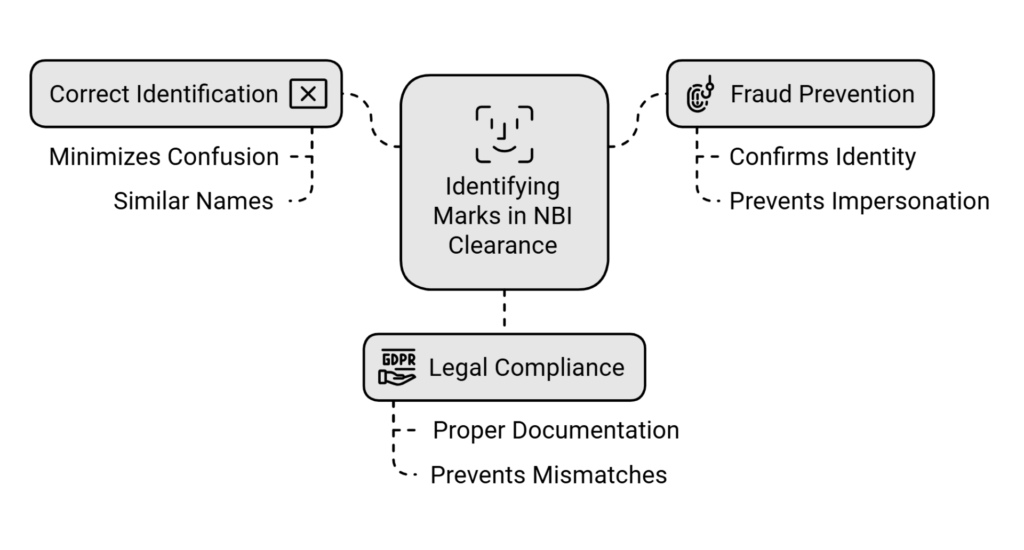
These marks help make sure you’re not confused with someone else. They keep your identity record accurate, make checks easier, and prove that the record really belongs to you.
Types of Identifying Marks
Examples of identifying marks:
- Scars
- Moles
- Birthmarks
- Burn marks
- Surgical scars
- Old injuries
- Tattoos
List any mark that’s easy to see and won’t go away.
How Identifying Marks Are Collected in NBI Clearance
When you apply for an NBI Clearance, write down any identifying marks on your form. Staff may also check visible marks during your photo and fingerprint session. These details are added to your official NBI record.
Examples of Identifying Marks Accepted by NBI
Describe your marks clearly and briefly, like:
- Mole on left cheek
- Scar on right eyebrow
- Birthmark on neck
- Tattoo on left forearm
- Surgical scar on abdomen
Keep it short, clear, and accurate.
Are Tattoos Considered Identifying Marks?
Tattoos are permanent and easy to recognize, so they count as identifying marks. Just say where it is, like: “Tattoo on right wrist.”
When Identifying Marks Can Affect Your NBI Result
Your identifying marks are important when:
- Someone else has the same name as you
- The NBI needs extra details to confirm it’s you
They help prove that you are a different person.
Can You Remove or Update an Identifying Mark in NBI?
Yes. If you remove a tattoo, have surgery, or get a new mark, you can update your NBI record. Just tell the staff during your biometrics.
How Accurate Identifying Marks Help Prevent “Hits”
A “hit” happens when someone has the same or similar name as you. Clear identifying marks help:
- Tell your record apart from others
- Make verification faster
- Avoid delays in getting your clearance
Accurate details keep things easy and prevent unnecessary problems.
What if You Have No Identifying Marks?
It’s simple. Just write:
“None”
or
“No identifying marks”
The NBI will accept it without any problem.
Common Mistakes Applicants Make
When noting your identifying marks, don’t:
- List temporary things like pimples or cuts
- Give unclear descriptions
- Add extra, unnecessary details
- Forget to update changed or removed marks
- Make up marks
Only include permanent and true marks.
Tips for Applicants When Reporting Identifying Marks
- Keep descriptions short
- List only permanent marks
- Be honest
- Don’t be embarrassed
- Update your record if things change
These steps help keep your NBI profile correct and consistent.
FAQs
1. Are identifying marks required?
Yes. If you don’t have any, just write “None.”
2. Can tattoos be used as identifying marks?
Yes, tattoos are accepted.
3. Will identifying marks delay my NBI Clearance?
No, they only help with verification.
4. What if I wrote the wrong identifying mark?
You can correct it next time you apply.
5. Do scars from accidents count?
Yes, if the scar is permanent.
Conclusion
Identifying marks may be a small part of your NBI form, but they are important. List a mole, scar, tattoo, or even “none”—the key is to be honest. This helps verify your identity, speeds up the process, and makes sure your NBI Clearance is accurate.